We do patio door replacement in Lawrence as a complete unit: frame, panels, sill and trim all new at once. If your sliding or hinged door drags, leaks air or water at the sill, has fogged glass or won't lock right, the new one will glide, seal and lock again.
It drags or jumps the track even after the track is cleaned
You can see daylight or feel a draft around the panels
Water shows up on the floor inside after a storm
Fog or haze between the panes
Soft or cracked wood at the frame or sill
The lock doesn't catch, or the door won't close without a shove
What wears a patio door out
A patio door panel is a big, heavy piece of glass that gets opened and closed thousands of times. Rollers and tracks wear, hinges sag, and weatherstripping flattens. The sill takes the most punishment: rain, snowmelt and foot traffic all land there. Add the slow settling every house does, and the frame drifts out of square until the door binds or stops sealing.
Sliding or hinged: picking the type
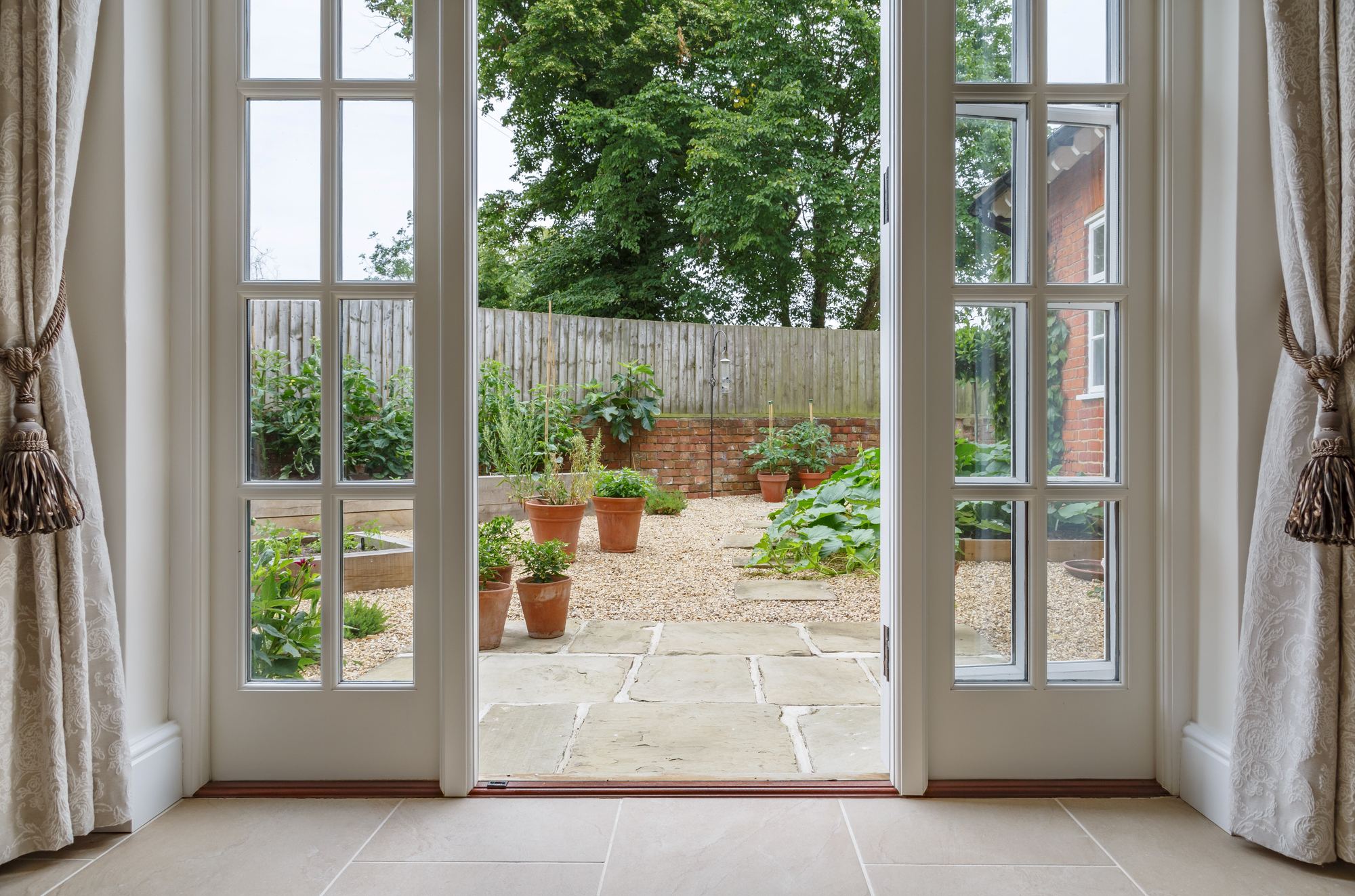
A sliding patio door needs no floor space to open, which is why it's the usual choice onto a deck or a tight patio. A hinged (French-style) patio door gives you the full width of the opening with both panels open, but you need clear room for them to swing.
Most replacements keep the same type and size, which keeps the job simple. Switching from sliding to hinged, or the reverse, is often possible in the same opening.
Frame, glass and hardware choices
Vinyl frames are the most common and the most affordable. Fiberglass and wood with an aluminum-clad exterior cost more and offer slimmer frames or a painted look. Door glass is always tempered safety glass, and low-E coatings help with heat in summer and cold in winter. Options include blinds sealed between the panes, so there's nothing to dust or tangle, and multi-point locks on hinged doors.
Install day, step by step
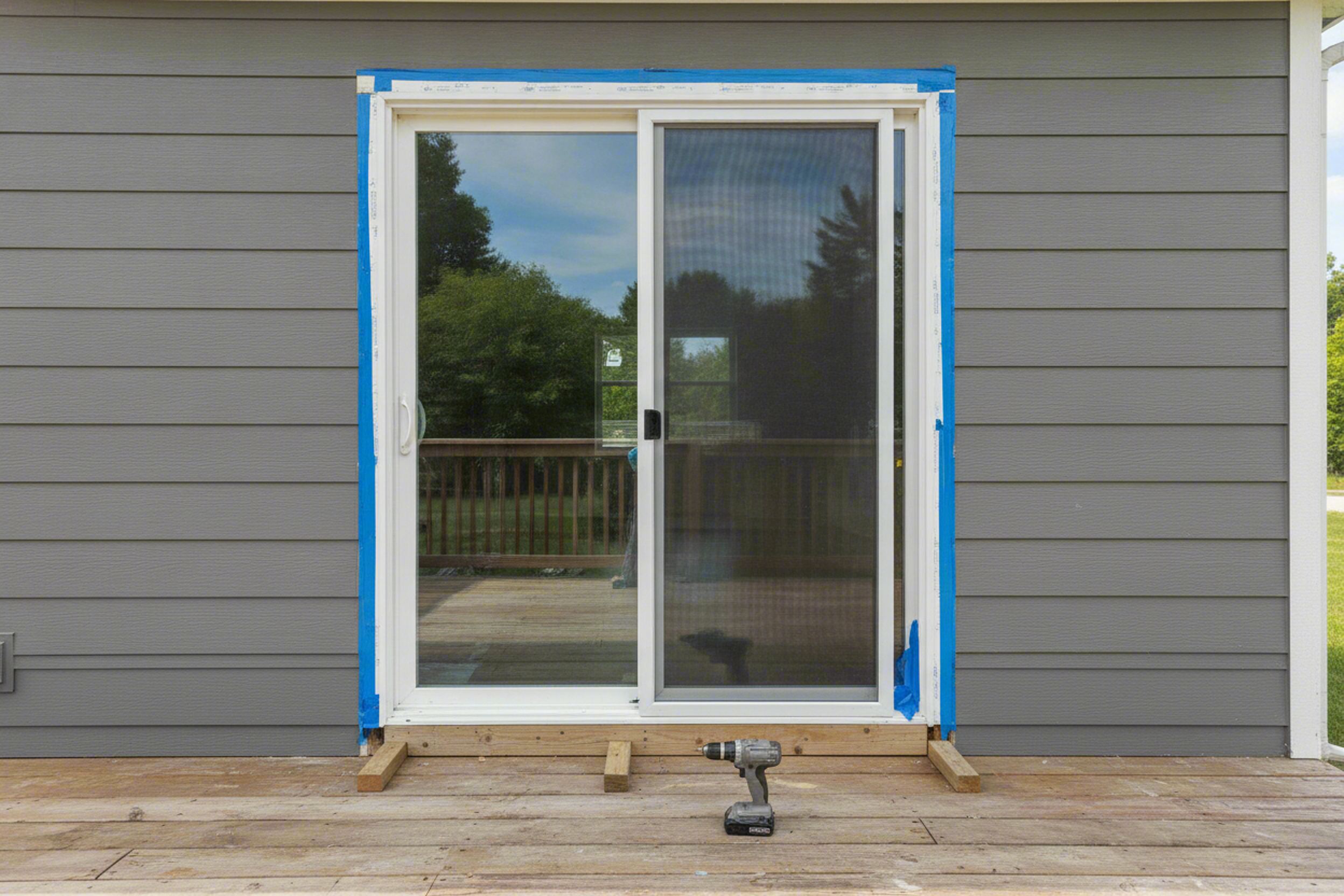
This is a full unit replacement, not a roller or track repair. We measure the opening and check the sill and subfloor for rot, since water collects at a door threshold more than anywhere else on the wall. On install day:
The old door comes out, frame and all
Any soft subfloor or framing is repaired, and the sill gets flashing so water drains out instead of in
The new unit goes in level and plumb, so it slides or swings without binding
Gaps are insulated, the outside is sealed, and trim is finished inside and out
Rollers, hinges and locks are adjusted before we leave
What a patio door quote depends on
Sliding or hinged, and how wide the opening is
Frame material and exterior color
Glass options and between-the-glass blinds
Rot repair at the sill or subfloor
Interior and exterior trim
Changing the size of the opening, which means framing work
See the cost page for how a quote is put together.
Questions
Questions about patio doors
Which is cheaper, sliding patio doors or French doors?
A sliding door usually costs less than a hinged French door of the same width and material. French doors have more hardware, and a pair of swinging panels takes more work to fit and adjust. The gap narrows on higher-end sliders.
Do I need a permit to replace a patio door?
It depends on the job. A new door in the same opening is different from widening the opening, which changes the wall framing. The City of Lawrence sets the rules, and we confirm what applies before work starts, including any historic review if the house is on a register.
How long should it take to replace a patio door?
Putting a new patio door into the same opening usually takes most of a day, trim included. Rot repair at the sill or subfloor adds time. The door is ordered to size ahead of time, so install day isn’t spent waiting on parts.
What is the life expectancy of a patio door?
A good door that’s installed level, with proper flashing under the sill, should serve for many years. Rollers and weatherstripping wear first. Once the frame, sill or glass seals give out, a full replacement is usually the better use of money.